














 2026-01-29
As AI computing continues to scale, AIDC (AI Data / Computing Centers) are becoming mission-critical infrastructure. In these environments, the UPS lithium battery is the last line of defense against power disturbances. Any failure of the UPS battery system can directly affect the continuity, stability, and safety of AI training and inference workloads.
The Role of UPS Batteries in AIDC
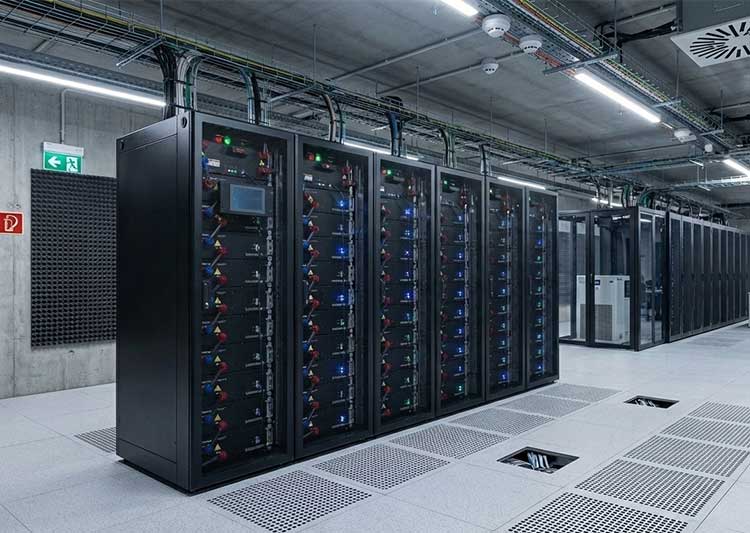
In AIDC facilities, computing clusters operate at extremely high power density and run continuously. The UPS battery must instantly take over when grid power fluctuates or fails, providing stable backup power until generators or other sources are fully online. Unlike traditional data centers, even a very short interruption can cause significant computing and business losses.
Impact on AI Training Workloads
AI training tasks usually run continuously for long periods, often lasting hours, days, or even weeks. They rely on large numbers of GPUs and accelerators working together, and any power interruption can immediately stop the entire training process. If a UPS battery fails during a grid disturbance or power outage, several serious problems may occur.
● Training interruption: A sudden shutdown of servers will terminate running training jobs and break long training cycles that may have been running for many hours or days.
● Data and checkpoint loss: If model parameters are not fully saved when power is lost, training checkpoints can be corrupted or lost, making it necessary to restart training from an earlier stage.
● Extended project timelines: Re-running large-scale training tasks consumes additional computing time and energy, leading to higher operational costs and delayed project delivery.
● Hardware stress: Abrupt power loss can place electrical and thermal stress on GPUs, servers, and power components, increasing the risk of hardware failure and reducing their service life.
Because AI training workloads are continuous, large-scale, and extremely resource-intensive, the stability and reliability of the UPS lithium battery play a critical role. A highly reliable UPS battery system helps ensure uninterrupted training, efficient use of computing resources, and stable operation of the entire AIDC infrastructure.
Impact on AI Inference and Real-Time Services
AI inference workloads are often even more sensitive to power stability than training tasks, especially in real-time applications such as cloud AI services, autonomous driving platforms, financial analytics, and industrial control systems. These applications require continuous, low-latency operation, and even very short power disturbances can affect system performance and service quality. If a UPS battery fails or does not respond fast enough, the following issues may occur:
● Service interruption: Millisecond-level power outages can disrupt real-time decision-making, interrupt online services, and cause visible downtime for end users.
● Data inconsistency: Unstable power supply may interrupt data processing or transactions, leading to incomplete results, errors, or the need for reprocessing.
● System instability: Frequent micro-outages and voltage fluctuations can reduce overall system stability, increase the risk of unexpected failures, and weaken user confidence in the platform.
For these mission-critical applications, a UPS lithium battery system with fast response, high reliability, and stable output is essential to ensure continuous service availability and protect the performance of AI-driven services in AIDC environments.
Why AIDC Places Higher Demands on UPS Lithium Batteries
Compared with traditional data centers, AIDC environments operate under much more demanding power conditions. They are typically characterized by:
● Ultra-high rack power density, with a large amount of computing power concentrated in a very limited space.
● Frequent and rapid load fluctuations caused by changing AI training and inference workloads.
● Extremely low tolerance for voltage drops or transfer delays, as even short power instability can affect computing tasks and services.
Under these conditions, UPS lithium batteries must be able to provide high-rate discharge, respond within milliseconds, and maintain stable performance under heavy thermal and electrical stress. They also need multi-level protection and intelligent management to prevent abnormal conditions from developing into safety incidents.
Any weakness in battery performance, response speed, thermal management, or safety design can quickly lead to power interruption, system instability, and computing downtime in AIDC environments.
As AI computing continues to scale, AIDC (AI Data / Computing Centers) are becoming mission-critical infrastructure. In these environments, the UPS lithium battery is the last line of defense against power disturbances. Any failure of the UPS battery system can directly affect the continuity, stability, and safety of AI training and inference workloads.
The Role of UPS Batteries in AIDC
In AIDC facilities, computing clusters operate at extremely high power density and run continuously. The UPS battery must instantly take over when grid power fluctuates or fails, providing stable backup power until generators or other sources are fully online. Unlike traditional data centers, even a very short interruption can cause significant computing and business losses.
Impact on AI Training Workloads
AI training tasks usually run continuously for long periods, often lasting hours, days, or even weeks. They rely on large numbers of GPUs and accelerators working together, and any power interruption can immediately stop the entire training process. If a UPS battery fails during a grid disturbance or power outage, several serious problems may occur.
● Training interruption: A sudden shutdown of servers will terminate running training jobs and break long training cycles that may have been running for many hours or days.
● Data and checkpoint loss: If model parameters are not fully saved when power is lost, training checkpoints can be corrupted or lost, making it necessary to restart training from an earlier stage.
● Extended project timelines: Re-running large-scale training tasks consumes additional computing time and energy, leading to higher operational costs and delayed project delivery.
● Hardware stress: Abrupt power loss can place electrical and thermal stress on GPUs, servers, and power components, increasing the risk of hardware failure and reducing their service life.
Because AI training workloads are continuous, large-scale, and extremely resource-intensive, the stability and reliability of the UPS lithium battery play a critical role. A highly reliable UPS battery system helps ensure uninterrupted training, efficient use of computing resources, and stable operation of the entire AIDC infrastructure.
Impact on AI Inference and Real-Time Services
AI inference workloads are often even more sensitive to power stability than training tasks, especially in real-time applications such as cloud AI services, autonomous driving platforms, financial analytics, and industrial control systems. These applications require continuous, low-latency operation, and even very short power disturbances can affect system performance and service quality. If a UPS battery fails or does not respond fast enough, the following issues may occur:
● Service interruption: Millisecond-level power outages can disrupt real-time decision-making, interrupt online services, and cause visible downtime for end users.
● Data inconsistency: Unstable power supply may interrupt data processing or transactions, leading to incomplete results, errors, or the need for reprocessing.
● System instability: Frequent micro-outages and voltage fluctuations can reduce overall system stability, increase the risk of unexpected failures, and weaken user confidence in the platform.
For these mission-critical applications, a UPS lithium battery system with fast response, high reliability, and stable output is essential to ensure continuous service availability and protect the performance of AI-driven services in AIDC environments.
Why AIDC Places Higher Demands on UPS Lithium Batteries
Compared with traditional data centers, AIDC environments operate under much more demanding power conditions. They are typically characterized by:
● Ultra-high rack power density, with a large amount of computing power concentrated in a very limited space.
● Frequent and rapid load fluctuations caused by changing AI training and inference workloads.
● Extremely low tolerance for voltage drops or transfer delays, as even short power instability can affect computing tasks and services.
Under these conditions, UPS lithium batteries must be able to provide high-rate discharge, respond within milliseconds, and maintain stable performance under heavy thermal and electrical stress. They also need multi-level protection and intelligent management to prevent abnormal conditions from developing into safety incidents.
Any weakness in battery performance, response speed, thermal management, or safety design can quickly lead to power interruption, system instability, and computing downtime in AIDC environments.
Conclusion
In AIDC, UPS battery failure is not just a power issue—it is a direct threat to AI training efficiency, inference reliability, and overall business continuity. Ensuring the safety, responsiveness, and long-term reliability of UPS lithium batteries is therefore a fundamental requirement for modern AI data centers. Advanced battery design, full-link safety protection, and intelligent monitoring are key to supporting uninterrupted AI computing in high-density environments.
To address chanllenges brought by growing AI workloads, Vision Battery releases AIDC UPS Lithium Battery Safety White Paper, aiming to draw attention to the need for AIDC UPS lithium battery safety standards, provide practical safety solutions, and support the high-quality development of the computing power industry. The full AIDC UPS Lithium Battery Safety White Paper is now available.
 Name
Name Tel
Tel Email
Email Country
 Company
 Information