














 2026-02-09
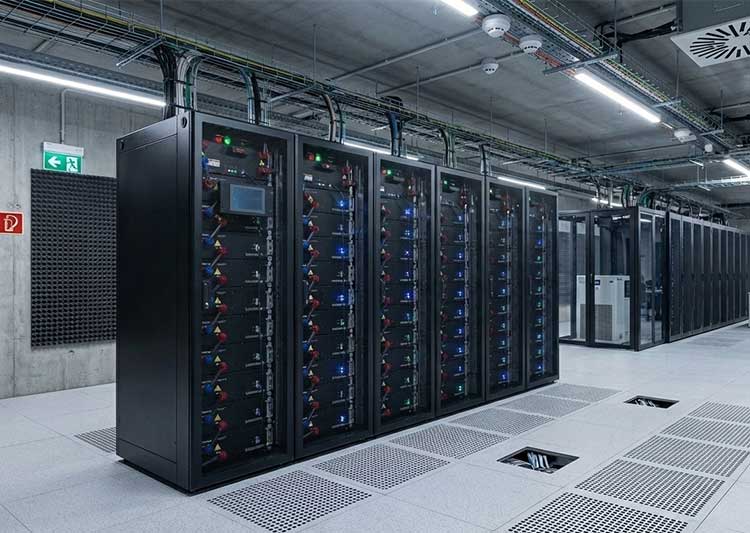
As AI computing continues to expand in scale and intensity, power reliability has become a defining factor for the stability of AI data centers. In AIDC, UPS lithium batteries are no longer passive backup components—they operate continuously under high stress and must support dynamic, high-density computing workloads.
Effective lifecycle management of UPS batteries is therefore essential for ensuring safety, performance, and long-term reliability in high-intensity AI computing environments. From cell selection and system design to operation, maintenance, and end-of-life handling, every stage of the UPS battery lifecycle directly affects AI data center uptime and risk exposure.
The Role of UPS Batteries in High-Intensity AI Computing
UPS lithium batteries provide instantaneous backup power during grid disturbances and protect AI workloads from voltage instability. In high-intensity AI computing environments, UPS batteries must support:
● Ultra-high rack power density
● Frequent high-rate discharge events
● Rapid load transitions driven by AI workloads
● Long-term float operation with minimal degradation
These operating characteristics place UPS batteries under continuous electrical and thermal stress, making lifecycle management far more complex than in traditional data centers.
Why Lifecycle Management Matters More in AIDC
Traditional UPS battery management often focuses on installation and periodic inspection. However, in AIDC environments, UPS lithium batteries are exposed to accelerated aging mechanisms that can shorten service life and increase safety risk if not properly managed.
Key reasons why lifecycle management is critical in AI data centers include:
● Reduced safety margin due to high utilization
● Increased thermal stress from dense system layouts
● Faster performance degradation under high-rate discharge
● Higher consequences of failure for AI training and inference workloads
Without a comprehensive lifecycle management strategy, UPS battery systems may experience unexpected failures, increased maintenance cost, and reduced availability of AI computing resources.
Design Stage: Building Lifecycle Reliability from the Start
Lifecycle management begins at the design stage. UPS batteries for high-intensity AI computing must be engineered with long-term operation and safety in mind.
1. Selecting Stable Battery Chemistry
Lithium iron phosphate (LFP) chemistry offers superior thermal stability, longer cycle life, and better tolerance to high-rate discharge, making it well suited for AIDC UPS applications.
2. System-Oriented Safety Architecture
Designing UPS lithium batteries with system-level protection ensures that safety mechanisms are integrated across cells, modules, cabinets, and the entire UPS system. This approach reduces the risk of localized faults escalating into system-wide incidents over the battery lifecycle.
Installation and Commissioning: Establishing a Healthy Baseline
Proper installation and commissioning are critical for long-term UPS battery performance. In high-density AI data centers, factors such as airflow design, cabinet spacing, and thermal balance must be carefully validated.
During commissioning, baseline data—including temperature distribution, voltage balance, and charge-discharge behavior—should be recorded. This baseline enables accurate performance tracking and early detection of abnormal trends during operation.
Operation Phase: Managing Batteries Under Continuous High Stress
During normal operation, UPS lithium batteries in AI data centers remain on float charge while standing ready for immediate high-rate discharge. This operating mode accelerates aging if not properly managed.
1. Real-Time Monitoring and Intelligent Control
Continuous monitoring of voltage, current, temperature, and state of health is essential for lifecycle management. An intelligent Battery Management System (BMS) enables early detection of degradation, imbalance, or abnormal thermal behavior.
2. Managing High-Rate Discharge Events
Frequent high-rate discharge events are unavoidable in AI computing environments. Lifecycle management strategies must account for cumulative stress caused by repeated discharge and recovery cycles, adjusting operating parameters to extend battery life while maintaining safety.
Maintenance and Predictive Management
Reactive maintenance is no longer sufficient for AIDC UPS batteries. Instead, predictive maintenance based on real-time data and trend analysis helps identify potential issues before they affect system reliability.
Key lifecycle maintenance practices include:
● Periodic evaluation of cell and module balance
● Thermal performance assessment at cabinet level
● Firmware updates for BMS and monitoring systems
● Replacement planning based on actual battery health, not fixed time intervals
This data-driven approach reduces unplanned downtime and optimizes total cost of ownership.
End-of-Life Management and Risk Mitigation
As UPS lithium batteries approach the end of their service life, internal resistance increases and safety margin decreases. In high-intensity AI computing environments, delayed replacement can significantly increase operational risk.
Effective lifecycle management includes clear criteria for battery retirement, safe decommissioning procedures, and compliance with recycling and environmental regulations. Proactive end-of-life planning helps avoid emergency replacements and supports sustainable data center operations.
Vision Battery's Lifecycle Management Approach for AIDC
Vision Battery designs its AIDC UPS lithium battery solutions with lifecycle management as a core principle. The REVO 3.0 solution integrates high-safety LFP cells, real-time monitoring BMS, and a 4L (Cell–Module–Cabinet–System) hierarchical intelligent safety architecture.
This full-link approach enables continuous visibility into battery health across the entire lifecycle, supporting predictive maintenance, long-term reliability, and enhanced safety in high-density AI computing environments.
By combining system-level protection with intelligent monitoring, Vision Battery helps AIDC operators manage UPS battery performance from installation to end-of-life with greater confidence and lower operational risk.
Conclusion
In high-intensity AI computing environments, UPS batteries are subject to continuous electrical, thermal, and operational stress. Managing these systems effectively requires a comprehensive lifecycle management strategy that extends far beyond initial installation.
From design and commissioning to operation, maintenance, and retirement, lifecycle management of UPS lithium batteries is essential for ensuring safety, reliability, and uninterrupted AI computing. As AIDC infrastructure continues to evolve, lifecycle-focused UPS battery solutions will play a critical role in supporting the long-term stability of AI data centers.
 Name
Name Tel
Tel Email
Email Country
 Company
 Information