













 2026-02-26
Artificial intelligence data centers (AIDC) are pushing power infrastructure to unprecedented levels. High-performance computing clusters demand continuous, stable electricity, while rapid workload fluctuations require instant power response. In this environment, selecting the right UPS lithium battery system is no longer a routine equipment decision—it is a strategic infrastructure choice.
Traditional UPS battery selection criteria, designed for conventional data centers, often fail to address the extreme conditions of AI-driven facilities. Operators must now consider factors such as ultra-high power density, rapid discharge capability, thermal stability, and long-term reliability under continuous stress.
Choosing an AIDC UPS battery system requires a comprehensive evaluation of performance, safety, scalability, and operational efficiency.
Why Traditional UPS Battery Selection Criteria Are No Longer Enough
Conventional data centers typically sized UPS batteries based on backup duration and footprint. In AI data centers, however, the priorities have shifted:
-
From backup capacity to continuous high-power support
-
From occasional discharge to frequent cycling
-
From component reliability to system resilience
UPS lithium batteries must now function as active power stabilizers rather than passive emergency backups.
Key Factors When Selecting UPS Lithium Batteries for AIDC
1. High Power Density and Discharge Capability
AI workloads generate sudden spikes in power demand. UPS batteries must deliver high current instantly without performance degradation. Systems designed for lower discharge rates may experience overheating, voltage instability, or accelerated aging.
2. Fast Response Time
During grid disturbances, AI computing processes cannot tolerate delays. UPS systems must switch seamlessly to battery power within milliseconds, ensuring uninterrupted operation of critical workloads.
3. Thermal Stability and Safety
High-density deployments increase the risk of heat accumulation. Battery systems with inherently stable chemistry—such as lithium iron phosphate (LFP)—and system-level thermal management provide enhanced safety in confined environments.
4. Scalability for Growing Computing Demand
AI data centers often expand rapidly. Modular UPS battery designs allow operators to scale capacity safely without redesigning the entire power infrastructure.
5. Reliability and Lifecycle Performance
Frequent cycling and high load conditions can shorten battery lifespan. Selecting systems designed for long service life under demanding conditions reduces total cost of ownership and minimizes operational disruptions.
The Role of System-Level Design in Battery Selection
Beyond individual specifications, operators should evaluate whether the UPS battery system incorporates system-level architecture, including:
-
Cell-to-system safety integration
-
Fault isolation capability
-
Advanced monitoring and diagnostics
-
Redundant protection mechanisms
AIDC operators increasingly prioritize solutions that combine performance with comprehensive risk management.
Vision AIDC UPS Lithium Battery Solution
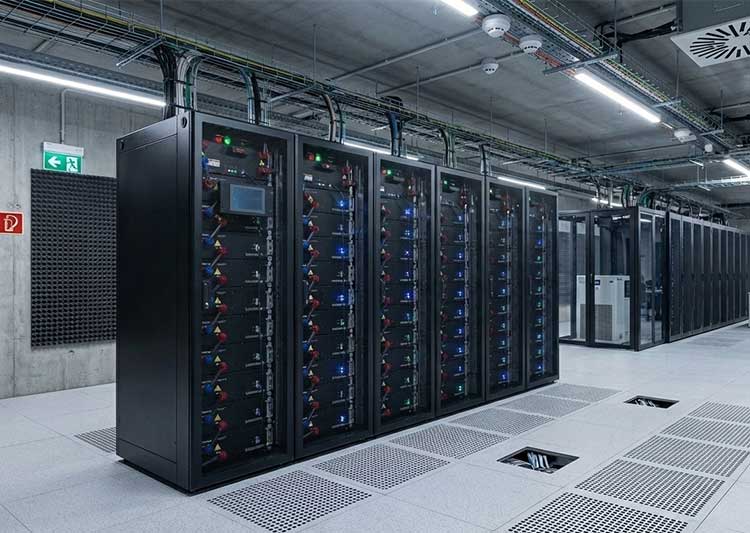
Vision Battery’s AIDC UPS lithium battery system is engineered specifically for high-density AI data centers. The solution integrates high power capability, fast response performance, and system-level safety design to ensure stable operation under extreme workloads.
Key advantages include:
- Support for high-rate discharge and rapid load changes
- Millisecond-level response for seamless power transition
- Modular architecture for scalable deployment
- Integrated safety features across cell, module, rack, and system levels
By aligning with the unique requirements of AI data centers, the system provides both operational reliability and long-term infrastructure resilience.
Conclusion: A Strategic Decision for Future Data Centers
Selecting the right UPS lithium battery system for an AI data center is no longer a straightforward procurement task. It is a strategic decision that directly impacts operational continuity, safety, and scalability.
As AI computing continues to evolve, operators must adopt a forward-looking approach to power infrastructure—choosing solutions designed specifically for the demands of high-density, high-performance environments.
 Name
Name Tel
Tel Email
Email Country
 Company
 Information