













 2026-02-25
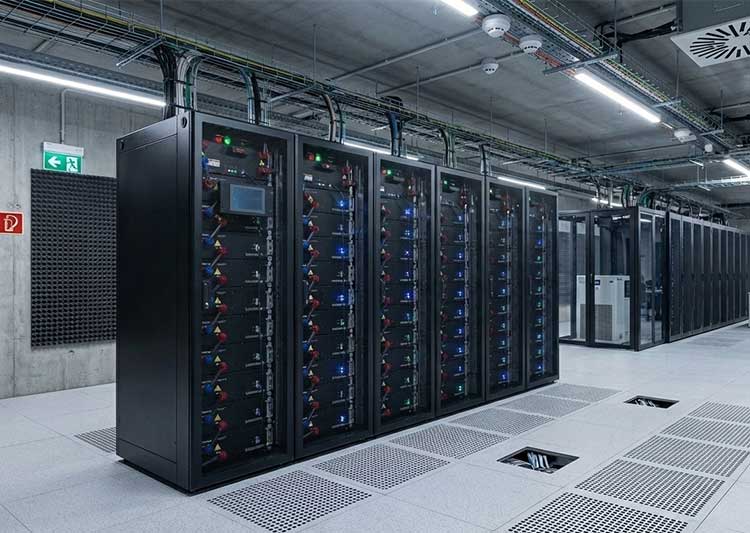
Artificial intelligence data centers (AIDC) are redefining the requirements for power infrastructure. As computing density increases dramatically—often reaching tens to hundreds of kilowatts per rack—the role of the UPS system has evolved from a passive backup to a critical, continuously stressed component of operations.
In traditional data centers, UPS batteries were primarily designed for occasional discharge during grid disturbances. In AI data centers, however, UPS lithium battery systems must handle frequent load fluctuations, rapid power transitions, and sustained high-power operation. This shift introduces new safety challenges that conventional battery protection approaches were not designed to address.
As a result, ensuring the safety of an AIDC UPS battery system now requires more than monitoring individual battery parameters. It demands a comprehensive, system-level safety strategy that considers electrical, thermal, mechanical, and operational risks across the entire installation.
The Limitations of BMS in High-Density UPS Applications
Battery Management Systems (BMS) are essential for lithium battery safety. They monitor voltage, current, temperature, and state of charge, and can disconnect the battery when abnormal conditions occur. In many applications, BMS protection is sufficient.
However, in high-density AI data center UPS environments, relying solely on BMS is no longer adequate.
1. What BMS Can Do
A BMS provides critical cell-level protections, including:
● Overcharge and over-discharge protection
● Overcurrent detection
● Temperature monitoring
● Cell balancing
These functions help prevent immediate battery damage and extend service life.
2. What BMS Cannot Address
Despite its importance, BMS protection has inherent limitations when facing system-level hazards:
● It cannot prevent thermal runaway propagation between modules
● It cannot manage structural or installation-related risks
● It cannot isolate cascading failures across racks
● It has limited ability to address external faults such as busbar short circuits or system integration issues
In short, a BMS protects the battery cells—but not necessarily the entire UPS battery system or the facility it supports.
Key Safety Risks in AIDC UPS Battery Systems
AIDC environments introduce a unique combination of stress factors that significantly increase safety risks for UPS lithium batteries.
1. Electrical Stress and High-Rate Discharge
AI workloads can cause rapid power fluctuations, requiring UPS batteries to deliver high current in very short timeframes. Repeated high-rate discharge accelerates aging, increases internal resistance, and raises the risk of abnormal heat generation.
2. Thermal Runaway and Propagation
High-density deployments reduce spacing between battery modules and racks, making heat dissipation more difficult. If a thermal event occurs in one module, it can quickly spread to adjacent modules without proper isolation.
3. Structural and Integration Risks
Mechanical design plays a critical role in safety. Poor module layout, insufficient fire barriers, or inadequate cable routing can turn localized faults into system-wide incidents.
4. Operational and Maintenance Risks
Human factors also matter. Incorrect installation, inconsistent module replacement, or improper maintenance procedures can introduce hidden vulnerabilities into the UPS battery system.
What Is System-Level Safety for UPS Lithium Batteries?
System-level safety refers to a multi-layer protection architecture that spans the entire battery system—from individual cells to modules, racks, and system controls.
Rather than reacting to failures, system-level safety aims to prevent incidents from escalating.
1. Cell-Level Safety
Safety begins with inherently stable battery chemistry and robust cell design. Lithium iron phosphate (LFP), for example, offers higher thermal stability compared to other lithium chemistries, making it suitable for critical infrastructure applications.
2. Module-Level Protection
At the module level, safety measures may include:
● Thermal insulation between cells
● Fire-resistant structural materials
● Integrated fusing mechanisms
● Pressure relief designs
These features help contain failures within a single module.
3. Rack-Level Isolation
Rack-level protection prevents faults from spreading across the installation. Strategies may include:
● Physical fire barriers
● Independent ventilation paths
● Electrical isolation between strings
● Localized monitoring systems
4. System-Level Coordination
At the highest level, safety depends on coordinated control between BMS, energy management systems (EMS), and facility protection systems. Fast fault detection and isolation mechanisms are essential to prevent cascading failures.
System-Level Safety Strategies for AIDC UPS Batteries
Implementing system-level safety requires a shift from reactive protection to proactive risk mitigation. Vision Battery's AIDC UPS lithium battery solution demonstrates how these principles can be applied in practice, ensuring reliable power delivery in high-density AI data centers.
1. Preventing Thermal Propagation
Thermal containment is a primary objective. Effective strategies include module spacing optimization, heat-resistant barriers, and directional airflow design to prevent heat transfer between modules.
2. Fault Isolation Design
Electrical architecture should allow rapid isolation of faulty modules or strings without disrupting the entire UPS system. Selective disconnect mechanisms and segmented protection zones can significantly reduce risk.
3. Advanced Monitoring and Predictive Diagnostics
Beyond basic BMS monitoring, advanced analytics can identify abnormal patterns indicating early-stage faults. Predictive diagnostics enable preventive maintenance before safety is compromised.
4. Rapid Emergency Response Mechanisms
In AIDC scenarios, response time is critical. Protection systems must be capable of millisecond-level intervention, including:
● Instantaneous disconnection
● Load transfer to redundant systems
● Emergency cooling activation
Design Principles for Safe UPS Battery Deployment in AI Data Centers
To ensure reliable operation, AIDC UPS battery systems should be designed according to several key principles:
● High power tolerance: Ability to handle sustained high load conditions
● Fast response capability: Immediate support during power transitions
● Redundancy: Multiple layers of protection and backup
● Scalability: Safe expansion as computing demand grows
● Maintainability: Designs that support safe inspection and replacement
These principles help transform battery safety from a component-level concern into a core infrastructure capability.
Conclusion: From Battery Protection to Power Infrastructure Resilience
As AI data centers continue to scale, the safety of UPS lithium battery systems becomes inseparable from the reliability of the entire facility. In this new environment, battery safety is no longer just about preventing cell failure—it is about ensuring uninterrupted power for mission-critical operations.
Moving beyond BMS toward system-level safety strategies enables operators to address the complex risks associated with high-density computing. By integrating protection across all layers of the battery system, AIDC operators can achieve the resilience required to support the next generation of digital infrastructure.
 Name
Name Tel
Tel Email
Email Country
 Company
 Information