















 2026-01-06
Introduction: UPS Battery Safety Enters a New Phase
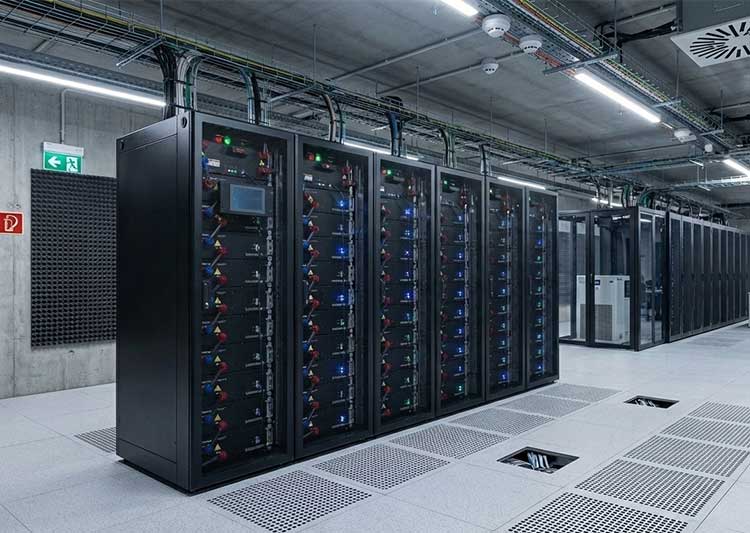
As AI data centers (AIDC) and high-performance computing facilities continue to increase power density, the definition of UPS battery safety is evolving. Modern UPS lithium batteries are no longer evaluated solely on whether they can prevent power failures, but on how they manage risk continuously under extreme and dynamic operating conditions.
Higher rack density, faster load transients, and longer operating cycles mean that safety can no longer rely on static protection measures. Instead, the latest UPS lithium battery systems integrate a series of safety innovations focused on anticipation, control, and containment. This article explores the key safety design trends defining modern UPS lithium batteries for high-density computing environments.
Safety Innovation 1: From Passive Protection to Active Risk Control
One major change in UPS battery safety is the shift from reacting to problems to managing risk in advance.
In the past, safety systems mainly responded after an abnormal condition had already occurred. Modern UPS backup lithium batteries take a different approach. They continuously track operating conditions and act early, before small issues turn into real risks.
This approach is enabled by:
● Real-time monitoring of voltage, current, and temperature
● Detecting abnormal trends, not just single alarm points
● Controlled system responses that keep operation stable
By actively managing risk instead of waiting for faults, the batteries can operate safely even under high load and fast-changing conditions. This capability is especially important in AIDC and high-density computing environments.
Safety Innovation 2: From Single-Point Protection to Full-Link Safety Architecture
Another important shift in UPS lithium battery safety is moving away from relying on a single protection point, toward protecting the entire system as a whole.
In high-density computing environments, risks do not always come from one place. Electrical, thermal, or control issues can appear at different points and spread quickly if they are not managed together. Modern UPS lithium batteries address this by applying safety logic across the full energy and power path, instead of depending on one critical safeguard.
This full-link approach focuses on:
● Coordinated protection across different parts of the system
● Clear limits that prevent faults from spreading
● Stable and predictable system behavior during abnormal conditions
By treating safety as a system-wide capability rather than a single component feature, UPS backup batteries achieve stronger resilience and better fault tolerance in AIDC environments.
Safety Innovation 3: Thermal Safety as a System Design Challenge
In high-density UPS environments, thermal safety is no longer just about cooling individual components. Heat must be managed across the entire system.
Modern UPS lithium battery design focuses not only on removing heat, but on controlling how heat behaves. This means keeping temperatures balanced, slowing down heat spread, and preventing a local temperature rise from affecting the rest of the system.
Key design approaches include:
● Managing heat through planned thermal zones and controlled heat paths
● Adjusting cooling performance in real time based on operating conditions
● Using insulation methods that slow down thermal escalation
By managing heat at the system level, the lithium batteries can remain thermally stable during long periods of high-power discharge and rapid load changes—conditions commonly seen in AIDC environments.
Safety Innovation 4: Speed as a Core Safety Feature
In modern UPS battery systems, how fast a system reacts has become a key safety measure.
High-density computing workloads can change in milliseconds, leaving almost no room for delayed protection. Modern UPS lithium batteries focus on detecting issues quickly, making fast decisions, and isolating faults immediately.
Key practices include:
● Quickly spotting abnormal electrical behavior
● Isolating the affected part of the system right away
● Reducing the impact of any fault on the rest of the system
By prioritizing speed, the batteries prevent local issues from affecting overall operation or critical downstream loads in AIDC environments.
Safety Innovation 5: Reliability Redefined as a Safety Capability
In AIDC environments, safety and long-term reliability go hand in hand. A UPS lithium battery that performs well at first but degrades unpredictably over time can create serious operational risks.
Modern UPS lithium batteries treat reliability as a core safety feature, focusing on predictable performance throughout the battery’s life.
Key practices include:
● Maintaining consistent performance under repeated high-load conditions
● Continuously monitoring system health to enable predictive maintenance
● Reducing the chance of unexpected failures
By integrating reliability into safety design, the batteries meet the long-term operational needs of mission-critical AIDC and AI data center facilities.
What These Safety Innovations Mean for AIDC Operators
For AIDC operators and data center designers, these safety innovations bring clear operational benefits:
● Better containment of faults in tightly packed installations
● Lower uncertainty over the battery’s long-term performance
● Greater confidence when running the power systems near maximum capacity
Modern UPS lithium battery safety innovations don’t make operations more complicated. Instead, they make the system easier to understand, control, and predict—helping operators manage risk more effectively.
From Safety Innovation to Engineering Practice: Vision Battery UPS Lithium Solutions
Safety innovations are only valuable if they can be applied reliably in real-world AIDC environments. Vision Battery puts these concepts into practice with UPS lithium battery designs that focus on predictable behavior, fast response, and stable long-term operation. By combining active risk management, full-link safety design, intelligent thermal control, rapid fault isolation, and reliability-centered engineering in a single system, Vision Battery UPS lithium battery solutions meet the evolving safety needs of high-density computing facilities.
Conclusion
As data center power density continues to rise, safety innovation has become a core differentiator in UPS battery design. Modern systems are defined not only by how much power they deliver, but by how effectively they anticipate, manage, and contain risk. Through active risk control, full-link safety architecture, intelligent thermal strategies, rapid fault isolation, and reliability-driven design, modern UPS lithium batteries are setting new safety benchmarks for AIDC and high-density computing environments.
 Name
Name Tel
Tel Email
Email Country
 Company
 Information