













 2026-02-03
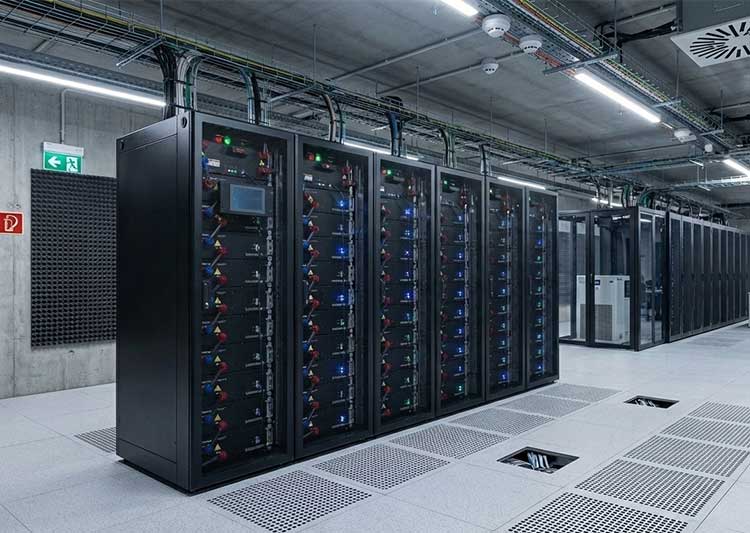
UPS lithium battery systems play a critical role in AI data center power protection. As the final backup power source, an AIDC UPS lithium battery must deliver instant response, stable discharge performance, and high operational safety. However, many existing UPS battery safety standards were developed for traditional data centers and may not fully address the risks associated with high-density AIDC environments.
The Importance of UPS Battery Safety Standards in AI Data Centers
UPS battery safety standards are designed to ensure that UPS lithium battery systems operate safely, prevent electrical hazards, and maintain reliable backup power during grid disturbances. In traditional data centers, UPS battery safety standards focus primarily on:
● Electrical protection performance
● Thermal management requirements
● Installation and ventilation guidelines
● Certification and safety testing procedures
Standards such as IEC and UL certifications have long supported safe UPS battery deployment. However, these UPS battery safety standards were largely created before the rise of AI computing workloads and do not fully reflect the operational stress faced by modern AIDC UPS lithium battery systems.
How AIDC Changes UPS Lithium Battery Safety Requirements
AI computing infrastructure introduces new risk factors that significantly increase the complexity of UPS lithium battery safety.
1. Ultra-High Power Density in AIDC
High-density AIDC facilities deploy GPU clusters and AI accelerators that generate massive computing power within compact rack space. Cabinet power density in AI data centers can reach 50kW to 750kW or higher, creating significant thermal and electrical stress for UPS lithium battery systems.
Compared with traditional data centers, high-density AIDC environments reduce installation space and increase heat concentration, making thermal management and UPS lithium battery safety more difficult.
2. Dynamic AI Workloads and High-Rate Discharge
AI training and inference workloads are highly dynamic. AI data centers frequently experience rapid power demand fluctuations when large computing clusters scale up or down. These dynamic workloads require AIDC UPS lithium batteries to switch repeatedly between float charging and high-rate discharge modes.
Frequent high-rate discharge increases internal battery temperature, accelerates aging, and reduces overall UPS lithium battery safety margin.
3. Low Tolerance for Power Instability in AI Computing
AI data centers support mission-critical real-time applications, including cloud AI services, autonomous driving platforms, and financial analytics systems. Even millisecond-level power instability can disrupt AI workloads or cause service interruption.
Therefore, AI data center UPS battery systems must meet stricter safety and response performance requirements than those defined in many existing UPS battery safety standards.
Limitations of Existing UPS Battery Safety Standards in AIDC
Although current UPS battery safety standards remain essential, they present several limitations when applied to AI data center UPS lithium battery applications.
1. Limited Testing for High-Density AIDC Operating Conditions
Traditional UPS battery safety standards often evaluate battery performance under relatively stable load conditions. However, AIDC UPS lithium battery systems operate under highly dynamic workloads, including frequent high-rate discharge events and rapid load transitions.
Without testing under realistic AI computing scenarios, existing UPS battery safety standards may not fully guarantee long-term reliability in AIDC environments.
2. Insufficient Focus on Thermal Runaway Propagation Prevention
Many UPS lithium battery safety standards focus primarily on individual module safety and fire protection measures. In high-density AIDC deployments, thermal runaway prevention requires system-level containment strategies.
Thermal runaway in one cell can propagate across battery modules and cabinet systems if full-link battery safety design is not implemented. Current UPS battery safety standards may not sufficiently evaluate large-scale thermal propagation risks.
3. Lack of Full-Link UPS Battery Safety Evaluation
Existing UPS battery safety standards often assess battery cells, modules, and cabinets independently. However, AIDC UPS lithium battery safety depends on coordination across multiple system layers, including power electronics, monitoring systems, and protection devices.
Without full-link battery safety evaluation, hidden system interaction risks may remain undetected in AI data center UPS battery systems.
4. Outdated Environmental and Operational Assumptions
Many UPS battery safety standards were originally developed for data centers with lower ambient temperature, slower workload variation, and wider installation space.
High-density AIDC environments operate closer to design limits, significantly reducing UPS lithium battery safety margin. Existing UPS battery safety standards may not adequately address these extreme operating conditions.
The Need for Next-Generation UPS Lithium Battery Safety Strategies in AIDC
As AI computing power continues to expand, AI data centers require UPS lithium battery solutions that go beyond traditional compliance-based safety design.
Future AIDC UPS lithium battery safety frameworks should include:
● Validation of high-rate discharge performance under dynamic AI workloads
● Advanced thermal runaway prevention and containment design
● Real-time monitoring and predictive fault detection
● Full-link battery safety architecture across cell, module, cabinet, and system levels
● Long-term reliability verification under continuous float operation
These advanced UPS battery safety strategies are essential for ensuring reliable AI computing power protection.
Conclusion
UPS battery safety standards have historically ensured reliable backup power for traditional data centers. However, AI data center infrastructure is introducing new operational challenges that existing UPS battery safety standards may not fully address.
Ultra-high power density, dynamic AI workloads, and strict uptime requirements demand more advanced UPS lithium battery safety design and monitoring capabilities.
To support stable AI computing and protect critical infrastructure, AIDC operators must adopt UPS lithium battery systems specifically engineered for high-density AIDC environments. Full-link battery safety strategies, advanced thermal runaway prevention, and intelligent monitoring technologies are becoming essential components of next-generation AI data center power protection.
To explore detailed solutions for high-density AIDC UPS lithium battery safety, download Vision Battery’s full AIDC UPS Lithium Battery Safety White Paper. Learn practical strategies to prevent thermal runaway, ensure high-rate discharge reliability, and protect your AI computing infrastructure.
 Name
Name Tel
Tel Email
Email Country
 Company
 Information