














 2026-01-07
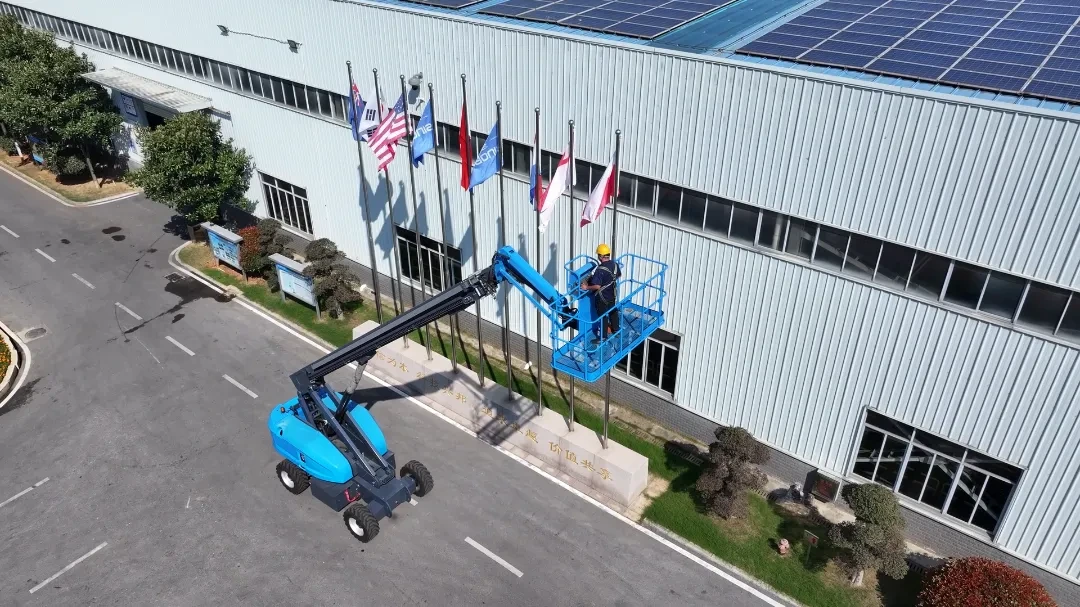
Scissor lifts are widely used for indoor and outdoor vertical access tasks in warehouses, factories, commercial buildings, and construction sites. As electric scissor lifts become standard across the industry, battery performance has a direct impact on safety, productivity, and operational reliability.
Unlike other aerial work platforms, scissor lifts follow a distinct operating pattern focused on repeated vertical lifting rather than long-distance travel. These characteristics place specific demands on the scissor lift battery, especially in terms of discharge stability and consistency.
This guide explains how scissor lifts operate, what their working cycles mean for battery performance, and how to select a battery solution that matches real-world application requirements.
How Scissor Lifts Operate: Typical Working Cycles
Scissor lifts are designed primarily for vertical movement. During daily operation, they typically perform a series of repetitive lifting tasks within a limited working area.
Common operating chara cteristics include:
● Frequent lift and lower movements
● Short-distance driving between work positions
● Repeated start-and-stop operation
● Continuous use during a single work shift
Rather than operating at high speed or over long distances, scissor lifts focus on stable vertical access. This predictable but repetitive working pattern defines how the battery is used throughout the day.
What These Working Cycles Mean for the Battery
The operating characteristics of scissor lifts directly translate into specific demands on the battery system.
Frequent lifting operations require the battery to deliver increased current repeatedly to raise and hold the platform under load. Stop-and-go movement places additional stress on discharge consistency, while continuous use over a shift requires stable performance without interruption.
As a result, a scissor lift battery must be able to:
● Deliver consistent power across repeated lifting cycles
● Maintain stable voltage output under load
● Perform reliably without noticeable degradation during daily operation
If these requirements are not met, operators may experience reduced lifting speed, inconsistent platform behavior, or system protection events that interrupt work.
Key Performance Requirements for a Scissor Lift Battery
Based on real operating conditions, the scissor lift batteries must meet several core performance requirements to support safe, stable, and efficient operation. These requirements are directly linked to how scissor lifts work on a daily basis.
1. Discharge Stability
Scissor lifts perform frequent lift-and-lower operations throughout a work shift. Each lifting action requires the battery to deliver power in a controlled and repeatable way.
Stable discharge behavior ensures smooth lifting speed and predictable platform movement during repeated operations. If discharge output fluctuates, lifting performance may become inconsistent, affecting both work efficiency and operator confidence.
2. Voltage Consistency Under Load
During lifting and driving, the battery operates under varying load conditions. Maintaining consistent voltage output is essential for the lift’s electrical and control systems to function properly.
Stable voltage helps prevent performance loss, supports accurate control of lifting and driving functions. Inconsistent voltage may lead to slower operation or trigger protective system limits.
3. Thermal Stability During Repetitive Operation
Repeated lifting cycles generate heat within the battery system, especially during continuous operation over long working periods.
Effective thermal management allows the battery to maintain stable performance while limiting temperature rise. Without adequate thermal stability, excessive heat can accelerate performance degradation and reduce long-term reliability.
4. System-Level Protection and Reliability
Scissor lifts often operate in environments where operating conditions can change during the day. Electrical, mechanical, or environmental variations may place additional stress on the battery system.
System-level protection against abnormal conditions supports safe operation and helps prevent damage to the battery and connected equipment. Reliable protection mechanisms also reduce the risk of unexpected downtime, ensuring stable daily operation.
How to Choose the Right Scissor Lift Battery
Choosing the right battery is about matching battery performance to how the equipment will actually be used. For procurement and equipment managers, the key factors are:
1. Operating pattern and lifting frequency
Frequent lifting cycles require a battery that can deliver stable and consistent power. Selecting a battery that meets the expected workload helps avoid downtime and maintain productivity.
2. Indoor or outdoor working environment
Environmental conditions affect battery performance. Make sure the battery is suitable for the temperature, dust, and moisture conditions where the lift will operate.
3. Charging availability and downtime
Batteries must fit the available charging schedule. A battery that can charge quickly or handle partial charging ensures continuous operation with minimal interruptions.
4. Space and weight limits
The battery must fit the scissor lift’s available space and weight capacity. Proper fit ensures safe operation and system compatibility.
Recommended Battery Solution for Scissor Lifts
For operators seeking stable and reliable performance, Vision Battery's V-EP Series Aerial Work Platform Batteries are designed to meet the key requirements of scissor lift applications.
Key features include:
● Stable discharge across repeated lifting cycles – ensures smooth and predictable platform movement, with compliance to stringent EMC testing standards.
● Consistent voltage under varying load conditions – supports accurate control of lifting and driving functions.
● Built-in protection for safe and reliable operation – IP67-rated design resists dust and short-term water immersion, enhancing durability in challenging environments.
● Intelligent BMS system – monitors voltage, current, and temperature in real time for precise energy management and long-term reliability.
The V-EP Series is suitable for both indoor and outdoor scissor lift applications and can be customized to match specific operational patterns, space constraints, and charging schedules, ensuring efficient and uninterrupted daily operation.
Conclusion
A scissor lift battery is closely tied to how the equipment operates on a daily basis. Frequent vertical lifting, repeated cycles, and continuous use place clear demands on discharge stability, voltage consistency, and system reliability.
By understanding scissor lift working cycles and application conditions, operators and equipment manufacturers can select battery solutions that deliver stable performance, safe operation, and long-term efficiency.
 Name
Name Tel
Tel Email
Email Country
 Company
 Information