













 2026-02-04
As AI computing continues to push data centers toward higher power density and more dynamic workloads, the safety requirements for UPS lithium batteries in AIDC (AI Data / Computing Centers) are fundamentally changing. While battery cell safety remains an essential foundation, it is no longer sufficient on its own.
In high-density AIDC environments, system-level protection has become more critical than individual cell safety. This shift reflects the reality that most safety incidents in modern AI data centers are not caused by a single defective cell, but by complex interactions across cells, modules, cabinets, and power systems under extreme operating conditions.
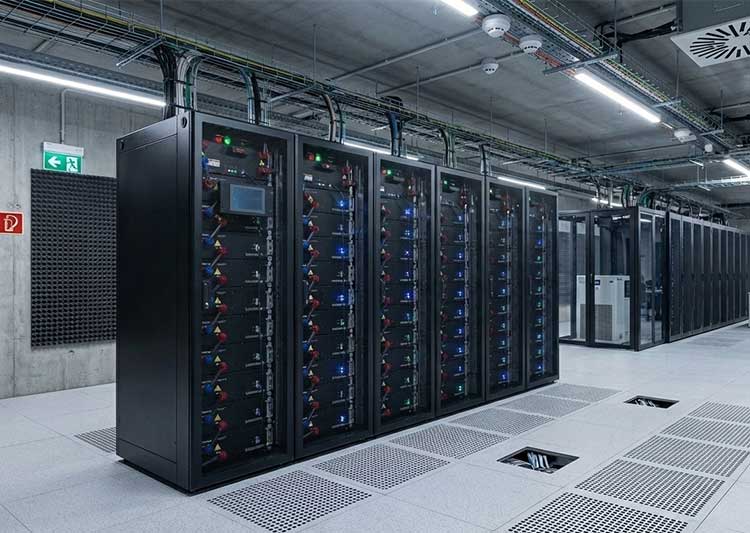
The Role of UPS Lithium Batteries in AIDC
UPS lithium batteries are the final safeguard protecting AI computing infrastructure from power disturbances. In AIDC facilities, UPS systems must respond within milliseconds, delivering stable backup power during grid fluctuations or outages while supporting ultra-high rack power density.
Compared with traditional data centers, AIDC UPS lithium batteries face:
● Higher discharge rates
● Faster load transitions
● Tighter thermal constraints
● Much lower tolerance for voltage instability
Under these conditions, safety risks extend beyond individual battery cells and increasingly emerge at the system level.
Why Cell Safety Alone Is No Longer Enough
High-quality lithium iron phosphate (LFP) cells provide excellent intrinsic safety, thermal stability, and resistance to thermal runaway. However, even the safest battery cells operate within a larger system that determines real-world performance and risk.
1. Cell-Level Safety Addresses Only Part of the Risk
Cell safety focuses on preventing internal short circuits, thermal instability, and material failure at the individual cell level. While essential, this approach assumes relatively stable operating conditions and sufficient safety margin.
In AIDC environments, UPS lithium batteries often operate close to their thermal and electrical limits. High-rate discharge, frequent cycling, and long-term float operation introduce stresses that cell-level design alone cannot fully manage.
2. Many Failures Originate Beyond the Cell
In real AIDC deployments, safety incidents are more likely to result from:
● Uneven load distribution across battery strings
● Thermal hotspots at module or cabinet level
● Delayed or inaccurate fault detection
● Coordination failure between battery, UPS, and power electronics
These risks emerge from system interactions, not from a single cell defect.
How AIDC Amplifies System-Level Safety Risks
1. Ultra-High Power Density
AI data centers concentrate massive computing power within compact spaces. UPS battery cabinets are installed closer together, reducing airflow and increasing thermal coupling between components. Heat accumulation at the cabinet or system level can quickly overwhelm even thermally stable cells.
2. Dynamic and High-Rate Discharge
AI workloads cause frequent and sudden changes in power demand. UPS lithium batteries must repeatedly transition between float charge and high-rate discharge. Without coordinated system-level control, these transitions can cause voltage instability, excessive current spikes, and localized overheating.
3. Reduced Safety Margin
AIDC systems are designed for maximum utilization efficiency. As a result, operating margins are narrower, leaving less buffer to absorb abnormal events. In such environments, delayed system response or incomplete protection logic can allow small issues to escalate rapidly.
What System-Level Protection Means in AIDC UPS Batteries
System-level protection refers to safety design and control mechanisms that operate across the entire UPS lithium battery system, rather than at a single component.
1. Multi-Layer Protection Beyond the Cell
Effective system-level protection includes coordinated safety measures at:
● Cell level: Intrinsic safety chemistry and mechanical protection
● Module level: Cell balancing, temperature consistency, and fault isolation
● Cabinet level: Thermal management, airflow control, and fire containment
● System level: Fast response relays, UPS coordination, and power management logic
Only when these layers work together can UPS lithium battery safety be ensured under real AIDC operating conditions.
2. Real-Time Monitoring and Intelligent Control
System-level protection relies on continuous monitoring of voltage, current, and temperature across the entire battery system. Intelligent algorithms detect early warning signs—such as abnormal temperature rise or current imbalance—and trigger protective actions before failures propagate.
This proactive approach is essential for preventing cascading failures in high-density AIDC UPS systems.
System-Level Protection and Thermal Runaway Prevention
Thermal runaway remains one of the most serious risks for UPS lithium batteries in AIDC. While intrinsically safe cells reduce the likelihood of runaway, system-level containment determines the outcome if an abnormal event occurs.
System-level protection enables:
● Early detection of abnormal heat generation
● Rapid isolation of affected modules or cabinets
● Physical and thermal barriers to limit heat propagation
● Coordinated shutdown strategies to protect IT loads
Without these measures, even a single localized failure can threaten the entire UPS system and AI data center.
Vision Battery’s System-Level Safety Approach for AIDC
To address the complex safety challenges of AI computing environments, Vision Battery developed its AIDC UPS lithium battery solution with system-level protection as a core design principle.
The REVO 3.0 solution adopts a 4L (Cell–Module–Cabinet–System) hierarchical intelligent safety architecture, ensuring that protection mechanisms are integrated across every level of the UPS lithium battery system.
By combining self-developed high-safety lithium iron phosphate (LFP) cells, real-time monitoring BMS, and coordinated system-level protection logic, the solution delivers full-link safety designed specifically for high-density and high-dynamic AIDC environments.
This system-oriented approach helps prevent localized issues from escalating into system-wide failures, ensuring stable and reliable power support for AI data centers.
Conclusion
In modern AIDC environments, UPS lithium battery safety can no longer rely on cell-level design alone. While safe battery chemistry remains essential, the most critical risks arise from system interactions under extreme power density and dynamic workloads.
System-level protection—spanning monitoring, control, thermal management, and coordinated response—is now the defining factor in UPS battery safety for AI data centers. Only through a full-link, system-oriented safety strategy can AIDC operators ensure reliable AI computing, prevent cascading failures, and protect their critical infrastructure.
 Name
Name Tel
Tel Email
Email Country
 Company
 Information