












 2025-12-30
As aerial work platforms (AWPs) continue to shift toward electrification, motive power battery performance has become a critical factor affecting safety, productivity, and operating cost. Among the most common AWP types, telescopic boom lifts and scissor lifts differ significantly in structure and working conditions, which leads to very different demands on their power batteries.
Understanding these differences is essential when selecting aerial work platform batteries, especially for OEMs (Original Equipment Manufacturers) and fleet operators aiming for reliable, long-term operation.
Different Working Principles Lead to Different Motive Power Battery Demands
Telescopic and scissor aerial work platforms are designed for different tasks:
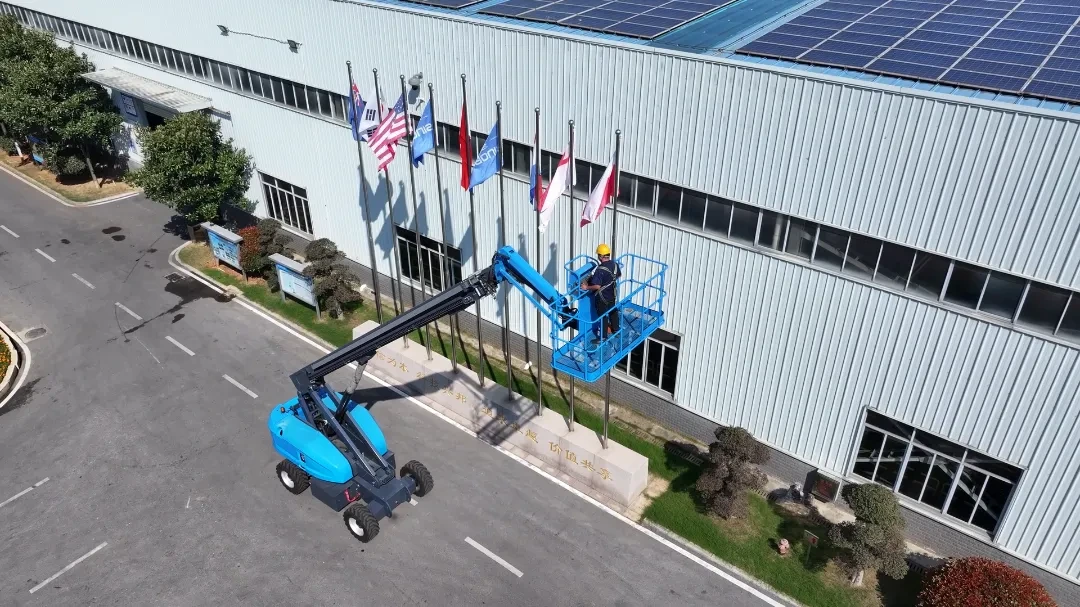
● Telescopic boom lifts are used for long horizontal outreach and complex positioning at height. They often operate outdoors, travel longer distances, and work on uneven terrain.
● Scissor lifts focus on vertical lifting, typically in warehouses, factories, and other indoor or flat-ground environments, with frequent start-stop operation.
These different operating patterns directly affect power demand, discharge characteris
Battery Requirements for Telescopic Boom Lifts
Telescopic aerial work platforms place higher stress on the battery system due to their combined lifting and driving functions.
Key telescopic boom lift battery requirements include:
1. High power output
Telescopic boom lifts require high peak power during driving, steering, and boom extension, especially when operating at height. The battery must support high discharge rates without performance degradation.
2. Stable performance under continuous load
Long working cycles and outdoor operation demand batteries that can maintain stable voltage and current over extended periods.
3. Structural and environmental robustness
Outdoor use introduces vibration, temperature variation, and dust exposure. Battery systems must be mechanically reinforced and thermally stable to ensure long-term reliability. For these reasons, high-power boom lift lithium battery systems with optimized electrical and thermal design are increasingly preferred in telescopic AWP applications.
Battery Requirements for Scissor Lifts
Scissor lifts typically operate under different conditions, resulting in a distinct set of battery priorities.
Key requirements for scissor lift battery include:
1. Long cycle life
Scissor lifts often perform frequent lifting cycles with short travel distances, leading to repeated charge and discharge. Batteries must be designed for high cycle durability.
2. Efficient charging and energy utilization
Frequent opportunity charging is common, especially in indoor applications. Batteries should support efficient charging while maintaining consistent performance.
3. Compact and space-efficient design
Scissor lift platforms usually have limited battery installation space, making compact system integration an important consideration.In these scenarios, lithium batteries optimized for cycle life, efficiency, and compactness offer clear advantages over traditional solutions.
Why Lithium Batteries Are Increasingly Adopted in Aerial Work Platforms
In aerial work platform applications, different battery technologies have long coexisted to meet varying cost, usage, and performance requirements. As operating conditions become more demanding and equipment utilization continues to increase, lithium motive power battery systems are being adopted in a wider range of AWP scenarios.
From an application perspective, lithium motive power batteries offer advantages such as:
● Higher energy density
● More stable voltage output
● Greater flexibility in charging strategies
These characteristics can support longer operating hours, more consistent performance, and improved energy efficiency in daily operation.
Lithium Battery Solutions Designed for Different AWP Applications
Selecting a lithium battery for an aerial work platform is not only about cell chemistry, but also about system-level design.
Telescopic vs. Scissor Lift Batteries
|
|
Telescopic AWP |
Scissor AWP |
|
Primary Function |
Long outreach & driving |
Vertical lifting |
|
Power Demand |
High peak & continuous |
Moderate but frequent |
|
Discharge Rate |
High |
Medium |
|
Typical Battery Capacity |
Larger |
Smaller |
|
Operating Environment |
Outdoor, uneven terrain |
Often indoor, flat ground |
|
Battery Design Focus |
Power output & stability |
Cycle life & efficiency |
Different AWP types require different optimization strategies:
Telescopic lifts benefit from battery systems engineered for
● High power output
● Thermal management
● Structural strength
Scissor lifts require solutions focused on
● Cycle life
● Charging efficiency
● Compact integration
Conclusion
Telescopic and scissor aerial work platforms differ significantly in how they operate, and these differences directly shape their battery requirements. By understanding the distinct power demands of each platform type, OEMs and fleet operators can select lithium battery solutions that deliver reliable performance, extended service life, and improved operational efficiency.
Choosing the right aerial work platform battery is not just a component decision—it is a strategic choice that supports safer and more productive work at height.
 Name
Name Tel
Tel Email
Email Country
 Company
 Information