















 2025-12-31
As electric aerial work platforms become more common, AWP battery performance has a direct impact on equipment safety, efficiency, and overall productivity. For telescopic boom lifts, one of the most critical battery parameters is the discharge rate.
A high discharge rate is not simply a technical specification—it is closely tied to how telescopic boom lifts operate in real working conditions. Understanding why it matters helps equipment manufacturers and fleet operators select boom lift battery solutions that perform reliably under demanding loads.
Understanding Telescopic Boom Lift Operations
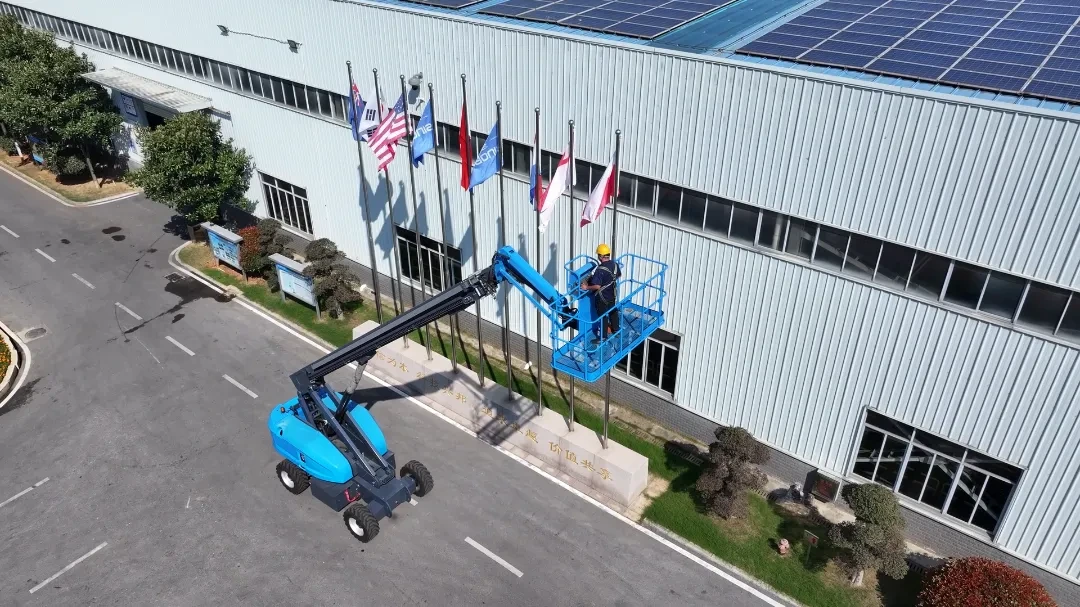
Telescopic boom lifts are widely used in construction sites, industrial maintenance, and other workplaces where workers need to reach high or far distances with precision. Unlike vertical-only platforms, which move mostly straight up and down, telescopic boom lifts can reach out horizontally and move in multiple directions at height.
During operation, these lifts often need to:
1. Drive and steer while elevated
The platform may move across the work area even when fully extended, requiring instant power for motors.
2. Extend or retract the boom under load
The arm can carry heavy equipment or workers, and the telescopic boom lift battery must supply enough power to lift smoothly.
3. Operate on uneven outdoor terrain
Outdoor conditions like slopes or rough surfaces demand extra energy to keep the lift stable and responsive.
Because these actions happen frequently and often at the same time, they create high, continuous demands on the battery. In other words, the battery must be able to provide enough power quickly and reliably whenever it’s needed. This is why discharge performance—the battery’s ability to release energy under load—is so important for telescopic boom lifts.
What High Discharge Rate Means
The discharge rate of a telescopic boom lift battery describes how quickly it can release the stored energy to power equipment. In simpler terms, it tells us how fast the battery can supply electricity when the lift needs it most.
For telescopic boom lifts, the battery must respond to frequent and sometimes simultaneous high-power demands. If the battery’s discharge capability is not sufficient, it can cause problems such as:
● Voltage drops during lifting or driving – the lift may slow down or lose power when moving the boom or driving, affecting smooth operation.
● Reduced responsiveness of hydraulic and electric systems – controls for lifting, extending, or steering may feel sluggish or delayed.
● Increased stress on battery cells and electronics – repeated high load without adequate discharge capability can shorten battery life or affect system reliability.
A high discharge rate boom lift battery is designed to provide stable and consistent power even when multiple high-demand actions occur at the same time. This ensures the lift can operate safely, efficiently, and reliably in real working conditions.
Why High Discharge Rate Telescopic Boom Lift Batteries Help Maintain Safety Operation
Stable and reliable power is crucial for safety, especially when operating telescopic boom lifts at height. Any sudden loss of power or drop in voltage could make the platform unstable or reduce operator control, which can be dangerous.
High discharge rate batteries help maintain safety in several ways:
● Maintaining consistent voltage during boom extension and movement – the lift can move smoothly even when carrying heavy loads, avoiding jerky or sudden movements.
● Reducing the risk of sudden power limitation under load – operators can rely on the battery to provide enough energy when it is needed most, preventing unexpected slowdowns or shutdowns.
● Ensuring smooth and controlled platform response – precise control of lifting, extending, or driving actions keeps operations predictable and safe.
This reliable performance is especially important in challenging outdoor conditions, such as uneven terrain, slopes, or harsh weather, and in operations that run multiple shifts per day. By supporting stable power delivery under all these conditions, high discharge rate batteries contribute directly to both safety and operational confidence.
Performance and Productivity Benefits
In addition to supporting safety, a battery’s ability to provide a high and stable discharge rate plays a key role in operational efficiency. For telescopic boom lifts, reliable power delivery ensures that work can continue smoothly throughout the shift.
Specifically, high discharge rate batteries help:
1. Ensure smooth driving and lifting
Operators can move and extend the boom without sudden slowdowns or interruptions, even under heavy load.
2. Maintain consistent performance as the battery discharges
The lift behaves predictably from full charge to near-empty, avoiding variations that can disrupt work.
3. Provide predictable equipment behavior for operators
Precise control and responsiveness reduce fatigue and allow tasks to be completed more efficiently.
By delivering consistent high-power output, these batteries help maximize uptime and productivity, ensuring that telescopic boom lifts can operate effectively in demanding environments and on long work shifts.
Our Lithium Battery Solutions for Telescopic Boom Lifts
Based on the demanding operating conditions of telescopic boom lifts, lithium battery solutions need to be designed with a strong focus on high discharge capability, system stability, and long-term reliability.
Rather than relying on cell performance alone, effective solutions, like Vision Battery's V-EP Series Aerial Work Platform Batteries, integrate optimized electrical architecture, thermal management, and battery management systems to support high current output under dynamic loads.
By aligning battery system design with real-world boom lift operating requirements, lithium UPS solutions can deliver stable power, support safe operation, and maintain consistent performance throughout the work shift.
Conclusion
For telescopic boom lifts, having a high discharge rate is not just a technical detail—it is a critical requirement for safe and efficient operation. Boom lift batteries that can consistently deliver stable power, even under peak load conditions, directly impact safety, equipment performance, and overall productivity.
Understanding the importance of discharge rate helps manufacturers and fleet operators make informed decisions when selecting lithium UPS solutions. Choosing the right battery ensures that the lift operates reliably, handles real-world working conditions smoothly, and supports long-term efficiency.
In short, a high discharge rate battery is essential for keeping telescopic boom lifts safe, responsive, and productive in all types of applications.
 Name
Name Tel
Tel Email
Email Country
 Company
 Information