














 2026-01-09
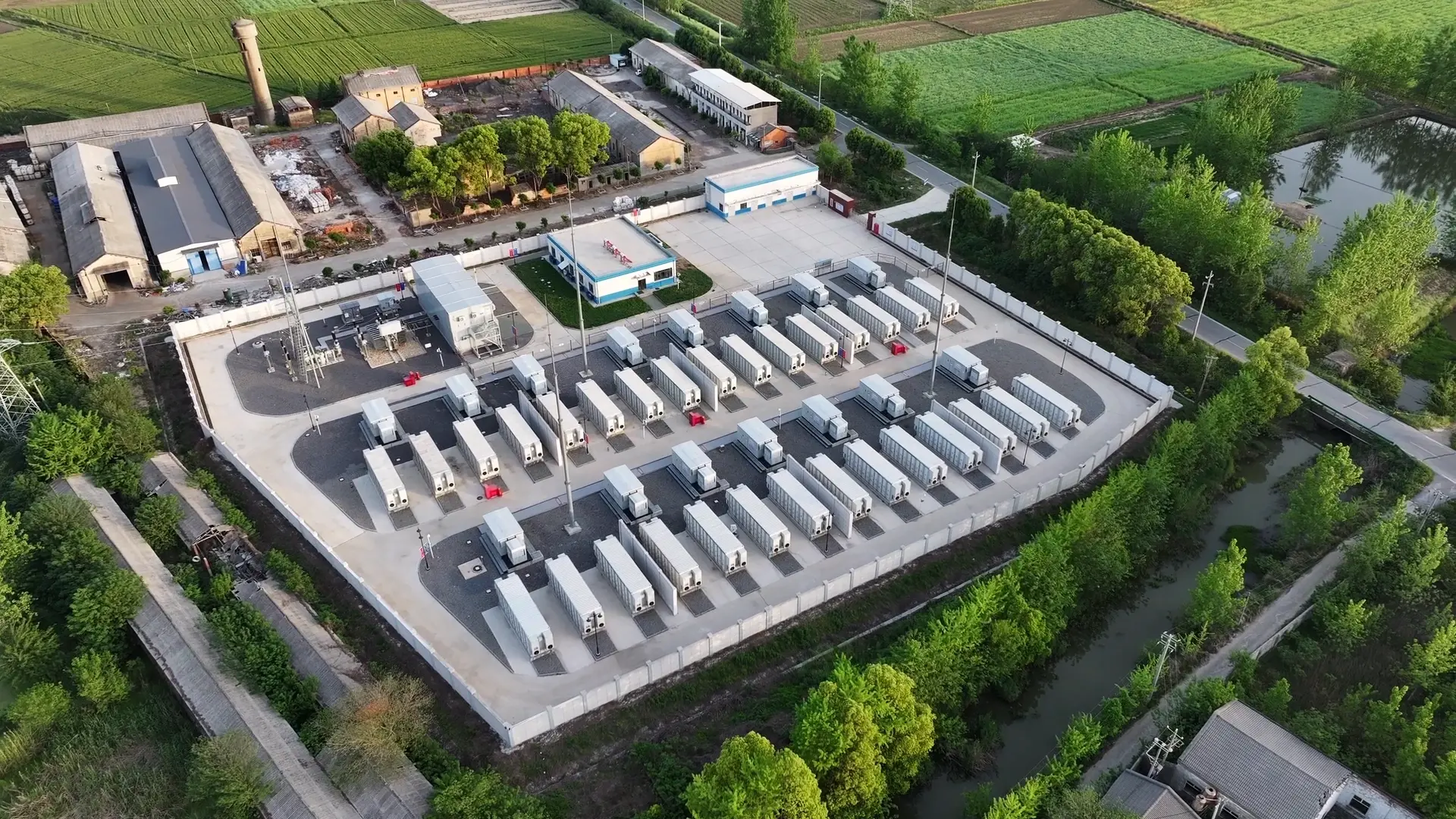
As Artificial Intelligence Data Centers (AIDC) and high-density data centers continue to expand, power infrastructure is evolving to meet unprecedented reliability and performance requirements. Outdoor UPS systems, including containerized and cabinet-based deployments, are increasingly adopted to support flexible expansion and rapid site deployment.
Lithium batteries have become the preferred energy storage technology for modern UPS systems due to their fast response, high power density, and long service life. However, when lithium batteries are deployed in outdoor UPS systems serving AIDC and data center environments, safety challenges become more complex. High cabinet power density, continuous standby operation, and extreme reliability requirements significantly raise the consequences of battery failure.
This article focuses on the specific safety challenges of lithium batteries in outdoor UPS systems for AIDC and data centers, and highlights the engineering considerations required to ensure long-term operational safety.
1. Extreme Power Density and Thermal Stress in AIDC UPS Systems
AIDC workloads drive exceptionally high rack and cabinet power densities, often far exceeding traditional enterprise data center levels. Outdoor UPS battery systems supporting these loads must deliver high discharge power within milliseconds, while operating under continuous float or standby conditions.
Key safety challenges include:
● Rapid heat generation during high-rate discharge
● Elevated internal temperatures in densely packed battery cabinets
● Reduced thermal margins under high ambient outdoor temperatures
In outdoor AIDC UPS systems, inadequate thermal design can accelerate battery degradation and increase the likelihood of thermal instability. Effective safety design requires application-specific thermal management, combining enclosure cooling, airflow optimization, and temperature monitoring at multiple system levels.
To improve system stability and battery lifespan, Vision Battery has adopted advanced liquid cooling technology in UPS lithium battery systems. Compared with traditional air cooling, liquid cooling offers higher heat exchange efficiency, effectively controlling cell temperature differences and preventing local overheating. It is especially suitable for high power density, 24/7 data center operations.
2. Thermal Runaway Propagation in High-Density UPS Battery Enclosures
Outdoor UPS systems for AIDC applications often prioritize compact footprint and modular scalability. As a result, lithium batteries are installed in highly integrated and confined enclosures, which can amplify the consequences of thermal runaway.
If a single cell enters thermal runaway, the risk of:
● Heat propagation to adjacent cells
● Rapid temperature escalation within the enclosure
● System-wide failure
is significantly higher in high-density UPS battery systems.
For AIDC and data center deployments, safety strategies must go beyond cell chemistry selection. Propagation prevention, physical isolation, controlled venting, and fast fault isolation at the module or rack level are essential to limit escalation and protect critical IT loads.
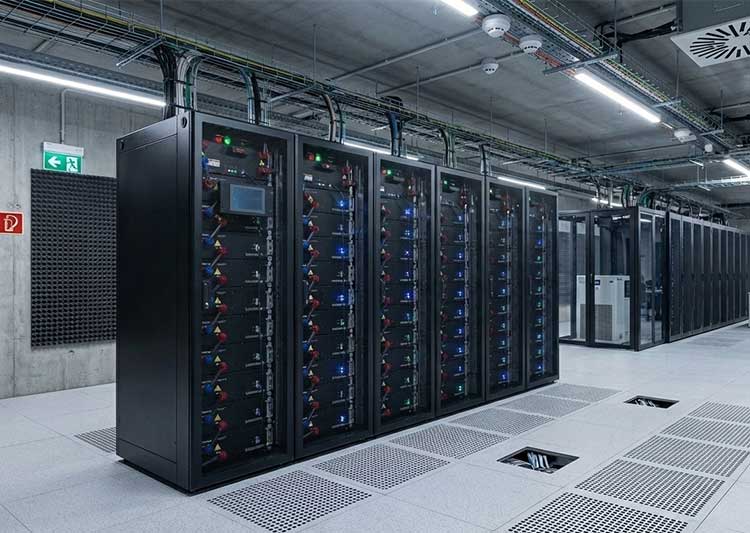
To address this challenge, Vision Battery integrates propagation control directly into its UPS lithium battery design. In Vision‘s REVO 3.0 series UPS lithium battery system,
● High-rate stacked LFP cells provide structural stability and thermal consistency under high-power discharge. IEC 62619 certified and UL 9540A tested, these cells show no fire after thermal runaway, ensuring safety in high-density UPS deployments.
● 100% module-level temperature monitoring detects abnormal heat early, enabling fast fault isolation before propagation escalates.
3. Reliability Requirements and Electrical Safety Under High Power Discharge
UPS lithium batteries in AIDC environments are required to deliver instantaneous, high-current output without voltage sag, ensuring uninterrupted operation of sensitive computing equipment.
This operating profile introduces unique electrical safety challenges:
● High current stress on conductors and connectors
● Increased sensitivity to contact resistance and aging
● Higher risk of localized overheating under fault conditions
Unlike energy storage systems designed for long-duration discharge, UPS lithium batteries for data centers are power-driven systems. Electrical safety design—including current distribution balance, protection coordination, and fault tolerance—plays a decisive role in overall system safety.
4. Fire Risk Management in Unattended Outdoor AIDC UPS Installations
Many outdoor UPS systems supporting data centers and AIDC facilities operate in unmanned or minimally attended environments. In these scenarios, early detection and rapid response are critical to minimizing fire-related risks.
Challenges specific to outdoor AIDC UPS systems include:
● Limited manual intervention during abnormal events
● Delayed firefighting response times
● Constraints on traditional fire suppression methods in sealed cabinets or containers
Effective fire risk management requires multi-layer detection mechanisms, such as cell-level temperature monitoring, gas detection, and intelligent alarm systems integrated with centralized data center monitoring platforms. Fire suppression strategies must be tailored to lithium battery characteristics rather than relying solely on conventional fire protection approaches.
To address these challenges, Vision Battery integrates 100% module-level temperature monitoring and built-in CO detection in its UPS lithium battery solutions. These systems provide early warnings of abnormal heat or gas buildup, enabling automatic protective actions before a thermal event escalates—essential for safely managing high-density batteries in confined outdoor enclosures.
5. System-Level Monitoring and Lifecycle Safety Management
For AIDC and data center operators, battery safety is not a one-time design consideration but a continuous lifecycle management challenge.
Outdoor UPS lithium battery systems must support:
● Real-time health monitoring
● Remote diagnostics and alarm reporting
● Predictive maintenance to identify early signs of degradation or abnormal behavior
An advanced Battery Management System (BMS), combined with system-level controllers and remote monitoring platforms, enables proactive risk control and improves both safety and availability. In AIDC environments, this level of visibility is essential to maintaining service continuity and protecting high-value computing assets.
Conclusion
Outdoor UPS systems play a critical role in supporting the rapid growth of AIDC and high-density data centers. While lithium batteries offer clear performance advantages, they also introduce elevated safety challenges in outdoor, high-power, and high-reliability environments.
Vision Battery’s REVO 3.0 UPS lithium solution, designed with module-level temperature monitoring, gas detection, and thermal propagation control, address these challenges and meet the stringent safety expectations of AIDC operations. A well-designed outdoor UPS battery system is not only a backup power solution but also a key element of data center reliability and operational resilience.
 Name
Name Tel
Tel Email
Email Country
 Company
 Information