















 2026-01-14
In modern communication networks, stable DC power is the foundation of continuous service. Base stations, transmission sites, and core network facilities all rely on rectifiers and power systems to convert AC power into stable DC supply. In this architecture, the telecom battery serves as the last line of defense, providing backup energy during grid failures and ensuring uninterrupted network operation.
With the growing deployment of 4G, 5G, and edge infrastructure, lithium telecom batteries are widely used in telecom power systems. The way these batteries are integrated with rectifiers and DC power systems directly affects safety, reliability, and long-term operational performance.
Role of Telecom Batteries in DC Power Architecture
A typical telecom power system consists of:
● AC input from the grid
● Rectifiers converting AC to DC (usually 48V)
● DC distribution to telecom equipment
● A telecom battery system for backup power
Under normal conditions, rectifiers supply the load and charge the telecom batteries. When the grid fails, the lithium telecom battery immediately takes over and maintains stable DC output to critical equipment. Seamless coordination between rectifiers, power controllers, and battery systems is essential for fast switchover and voltage stability.
Technical Integration and System Coordination
1. Electrical Matching with Rectifiers
Each lithium telecom battery operates within a defined voltage and current range. Proper integration with rectifiers ensures:
● Accurate charging voltage
● Controlled charging current
● Stable DC bus during load changes
● Smooth transition between charging and discharging
From a system design perspective, electrical matching prevents abnormal stress on telecom batteries and ensures long service life and consistent performance across different operating conditions.
2. BMS Communication and Control
Every lithium telecom battery is equipped with a Battery Management System (BMS) that monitors:
● Cell and module voltage
● Charge and discharge current
● Temperature
● State of charge (SOC) and state of health (SOH)
Through communication interfaces such as CAN or RS485, the BMS exchanges real-time data with rectifiers and power system controllers. This enables:
● Intelligent charging control
● Alarm and event reporting
● Protection coordination
● Remote monitoring of telecom batteries
Such system-level communication allows operators to manage large numbers of telecom battery sites efficiently and safely.
3. Redundancy and Parallel Operation
To say this clearly in procurement language: a telecom network does not rely on a single battery. It relies on a battery system with redundancy.
Modern lithium telecom batteries are designed for parallel operation, allowing multiple battery strings or modules to work together. When integrated with rectifiers and DC systems, this supports:
● Load sharing between telecom batteries
● N+1 or N+X redundancy
● Fault isolation without system shutdown
● Step-by-step capacity expansion
This architecture improves network availability and reduces the risk of single-point failure.
Vision Battery Telecom Battery Solution
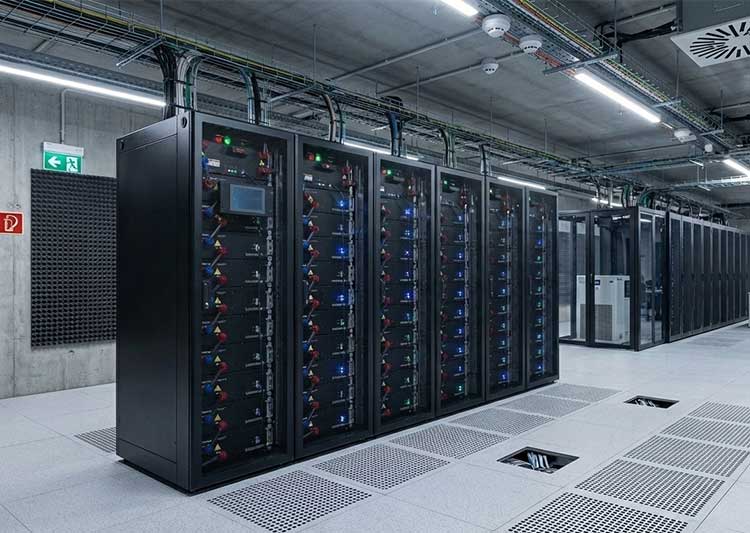
V-LFP48V Standard Series Telecom Lithium Batteries are designed for seamless integration with rectifiers and DC power systems. Key features include:
●Modular design for flexible capacity expansion
●Independent BMS in each module for real-time monitoring and protection
●Compatibility with mainstream rectifiers and standard 48V DC architectures
●Parallel operation support for redundancy and load sharing
This design ensures that whether a site requires a few modules or a large-scale deployment, our lithium telecom batteries can provide reliable, scalable backup power while simplifying system integration.
Deployment and Operation
1. Installation and Commissionin
For operators and system integrators, smooth deployment is critical. A well-designed telecom battery system supports:
● Standard DC connection to rectifier outputs
● Plug-and-play communication with power controllers
● Clear configuration of voltage, current limits, and alarms
● On-site testing and commissioning with the rectifier system
Proper commissioning ensures that lithium telecom batteries, rectifiers, and monitoring platforms operate as one coordinated system from the first day of operation.
2. Operation, Monitoring, and Maintenance
After installation, continuous monitoring is essential for network stability. Integrated telecom battery systems allow:
● Centralized monitoring of battery status
● Early warning of abnormal temperature or capacity loss
● Predictive maintenance based on BMS data
● Simplified replacement or expansion of battery modules
This reduces operational risk and lowers OPEX for large-scale telecom networks.
Network Reliability and Business Value
High network availability is not only a technical goal but also a commercial requirement defined in Service Level Agreements (SLA). Well-integrated lithium telecom batteries help ensure:
● Fast response to grid failures
● Stable DC voltage during load transients
● Reliable backup duration
● High system availability for critical sites
For mobile operators and infrastructure providers, this directly supports uptime targets and long-term service quality.
Conclusion
The integration of telecom batteries with rectifiers and power systems is a core element of modern telecom power architecture. Through precise electrical matching, intelligent BMS communication, scalable parallel design, and standardized commissioning, lithium telecom batteries can operate safely and reliably as part of a complete DC power system.
For network operators, choosing a well-integrated telecom battery solution means not only selecting an energy storage product, but also ensuring long-term system stability, high availability, and readiness for continuous network expansion in the 4G, 5G, and future communication era.
 Name
Name Tel
Tel Email
Email Country
 Company
 Information