














 2025-12-19
Indoor equipment rooms play a critical role in modern telecom networks. These rooms host sensitive communication equipment such as base station controllers, transmission systems, and power distribution units. To ensure continuous and stable operation, a reliable telecom battery system is essential.
Unlike outdoor or cabinet-based deployments, indoor equipment rooms impose specific requirements on batteries related to safety, space utilization, environmental control, and maintenance. As network architectures evolve and battery technologies advance, understanding these requirements becomes increasingly important for network planners and operators.
This article outlines the key requirements for telecom batteries used in indoor equipment rooms, with a focus on system design considerations rather than specific battery chemistries.
The Role of Telecom Batteries in Indoor Equipment Rooms
Indoor equipment rooms are typically designed to support mission-critical telecom infrastructure. Any power interruption, even for a short duration, can affect network stability and service availability.
A telecom battery installed in an indoor equipment room serves several functions:
● Providing backup power during grid outages
● Stabilizing DC power supply during voltage fluctuations
● Supporting controlled shutdown procedures if required
Because these rooms often operate continuously and are located within buildings or shared facilities, battery system requirements extend beyond basic electrical performance.
Space and Layout Constraints
1. Limited Floor Space and Weight Considerations
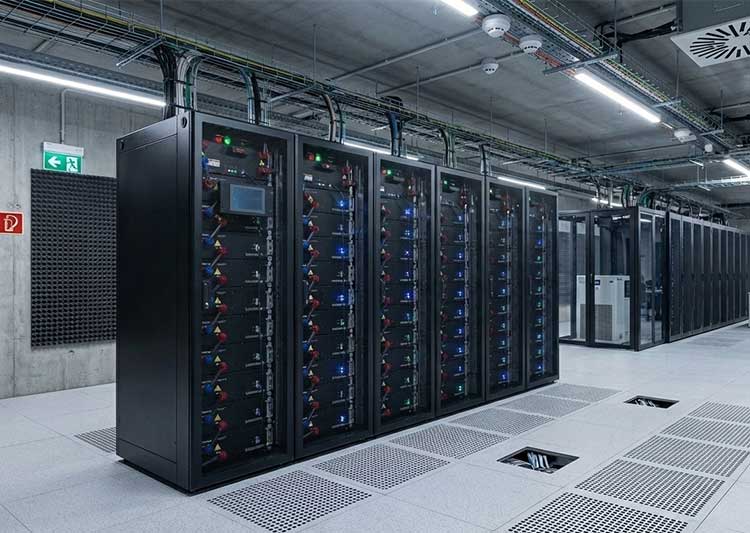
Indoor equipment rooms usually have limited available space, shared between telecom equipment, power systems, and cooling infrastructure. Telecom batteries must be selected and arranged to fit within defined spatial constraints.
Key considerations include:
● Footprint of battery racks or cabinets
● Weight load limits of building floors
● Clearance requirements for installation and maintenance
2. Modular and Scalable Configuration
Indoor sites often require flexibility for future network expansion. Modular battery systems allow operators to scale capacity without major changes to room layout or power architecture. To support future expansion, many indoor deployments adopt modular telecom battery systems that allow capacity to be scaled by adding battery modules without redesigning the entire power system. Such modular designs are commonly used in 48V telecom battery systems designed for indoor environments.
Safety Requirements for Indoor Battery Deployment
Safety is one of the most important requirements for batteries installed indoors, where personnel and other equipment are in close proximity.
1. Electrical Safety
Telecom battery systems must operate within safe voltage ranges and comply with relevant electrical standards. Proper insulation, grounding, and protection against overcurrent are essential to prevent electrical hazards.
2. Thermal Safety and Fire Risk Management
Indoor environments require careful control of thermal behavior. Batteries for telecom should demonstrate:
● Stable operation under controlled room temperatures
● Protection against overheating
● Fault isolation to prevent escalation in case of abnormal conditions
Modern lithium ion telecom battery systems often incorporate multi-level protection and monitoring to enhance thermal safety, which is particularly important in enclosed indoor spaces.
Environmental Control and Operating Conditions
1. Temperature and Humidity Requirements
Indoor equipment rooms are typically air-conditioned to maintain stable temperature and humidity levels. Telecom batteries must be compatible with these controlled environments.
Key environmental parameters include:
● Recommended operating temperature range
● Tolerance to short-term temperature variations
● Humidity resistance and condensation prevention
Stable environmental conditions help extend battery service life and improve overall system reliability.
2. Ventilation and Airflow
Proper airflow is essential to dissipate heat generated by both telecom equipment and battery systems. Battery placement should not obstruct airflow paths or cooling systems within the room.
Power Compatibility and System Integration
1. Voltage and Power Architecture Alignment
Most indoor telecom equipment operates on standardized DC voltage levels, commonly within a 48V framework. Batteries used in indoor rooms must align with existing rectifiers, DC distribution units, and protection devices.
Maintaining compatibility simplifies system integration and reduces installation complexity.
2. Interaction with Rectifiers and Power Management Systems
Batteries for telecom must work seamlessly with rectifiers and power management systems to ensure smooth transition between grid power and battery backup. Proper coordination helps prevent voltage instability and system alarms.
Monitoring, Control, and Maintenance Requirements
1. Importance of Battery Monitoring
Indoor equipment rooms often support multiple critical systems, making visibility into battery status essential. Monitoring functions may include:
● Voltage and current measurement
● Temperature monitoring
● State-of-charge and state-of-health estimation
Advanced monitoring enables proactive maintenance and reduces the risk of unexpected battery failure. Today, some telecom backup solutions integrate intelligent BMS and remote monitoring capabilities, allowing operators to track key parameters such as voltage, temperature, and state of charge in real time—an approach adopted by products such as Vision Battery’s V-LFP48V Standard Series telecom lithium batteries.
2. Maintenance Accessibility
Indoor deployments require clear access paths for inspection, testing, and potential replacement. Battery systems should be designed to allow safe and efficient maintenance without disrupting other equipment in the room.
Both traditional and lithium batteries for telecom benefit from clear maintenance planning, even when routine maintenance requirements differ.
Noise and Operational Impact
Although telecom batteries themselves are generally quiet, associated components such as cooling fans or power electronics may generate noise. For indoor equipment rooms located within office buildings or shared facilities, noise control can be an important consideration.
Battery systems should support low-noise operation and integrate smoothly into the overall room environment.
Lifecycle and Total Cost of Ownership Considerations
When selecting telecom batteries for indoor equipment rooms, operators often evaluate long-term factors rather than initial cost alone.
Important lifecycle considerations include:
● Expected service life under indoor operating conditions
● Maintenance frequency and resource requirements
● Replacement planning and system downtime impact
A standardized indoor deployment environment allows operators to assess performance more consistently across different sites and battery technologies.
Compliance with Standards and Regulations
Batteries installed in indoor equipment rooms must comply with applicable electrical safety, fire protection, and environmental standards, ensuring safe operation and smooth approval during installation and inspection. Commonly referenced standards and regulations include:
● IEC 62619 – Safety requirements for secondary lithium batteries used in industrial and telecom applications
● UL 1973 – Safety standard for stationary and telecom backup powe systems (commonly referenced in North America)
● IEC 62933 series – System-level safety requirements for energy storage systems
● NFPA 855 – Installation and fire safety requirements for stationary energy storage systems
● ETSI EN 300 019 – Environmental conditions for telecom equipment operation
● IEC 60068 series – Environmental testing standards for temperature and humidity
Some telecom battery solutions, such as those certified to IEC 62619 and UL 1973, provide an example of products that meet key safety and regulatory requirements for indoor deployments, helping operators ensure reliable and compliant installations.
Conclusion
Indoor equipment rooms impose specific and multi-dimensional requirements on telecom battery systems. Beyond providing backup power, batteries must meet strict expectations related to safety, space efficiency, environmental compatibility, and system integration.
By carefully evaluating these requirements, telecom operators can deploy telecom batteries that support stable and reliable indoor network operation. As networks continue to grow in complexity, a well-designed indoor battery system remains a foundational element of telecom infrastructure.
 Name
Name Tel
Tel Email
Email Country
 Company
 Information